
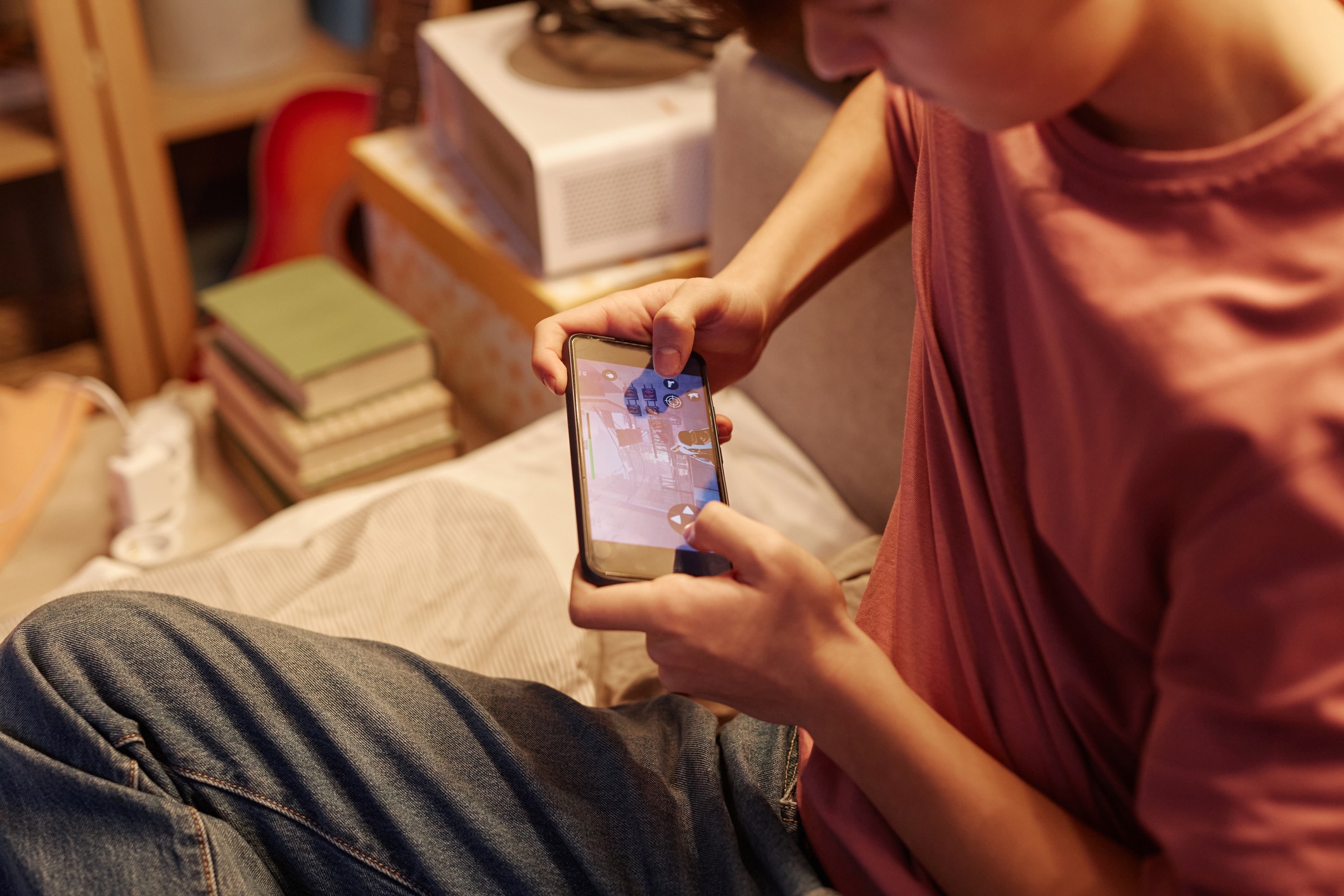
If you’ve ever looked at your child and felt like they’ve disappeared into a screen, you’re not alone. I hear this from parents all the time.
“My kid used to talk with us nonstop.”
“They used to be outside all the time.”
“They used to draw, build things, ride bikes.”
Now it feels like all they want to do is be online.
That shift can be really hard to watch, and it’s easy to blame yourself or feel powerless. Many parents question if they did something wrong or if they waited too long to step in. If you’re worried your child is one of those kids addicted to screens, I want you to know this is common, and there are practical steps you can take to rebuild connection and restore balance. This is about powerful technology that is intentionally designed to capture attention and keep it. Kids are not weak for struggling with this. Their brains are still developing, and they are up against systems built to hold their focus.
Start with Safety: Is Screen Time Affecting Your Child’s Well-Being?
Before trying to change screen habits, it helps to zoom out and check on how your child is really doing.
Are they eating and sleeping regularly?
Are they still connecting with others, even in small ways?
Have you noticed big changes in mood, behavior, or motivation?
If you ever worry that your child might hurt themselves or someone else, take it seriously and reach out for help. There is zero shame in getting help. Also, trust your gut. If your child is spiraling, shutting down, exploding more than usual, refusing school, withdrawing from friends, or you are noticing self-harm, substance use, or big shifts in appetite and sleep, it is worth getting support. To find local licensed therapists who specialize in working with teens, I highly recommend using psychologytoday.com.
Begin with Connection, Not Control
Once safety is clear, start with conversation (big surprise if you’ve followed my work). Sit down with your child when things are calm and ask what they enjoy most about their screen time. You might hear things like:
“It’s how I talk to my friends.”
“It’s the only place I feel good at something.”
“It’s how I relax.”
Even if you don’t love the answers, listen. Kids need to feel understood before they open up to change.
You don’t have to love what they say. You don’t even have to agree with it. You just want to show them you understand why it matters to them. When you stay calm and curious, you build trust. You’re basically saying, “I see you, and I’m not here to attack you.”
Explain the Why Behind the Screen Time Rules
Once your child feels heard, explain why you have limits in place. You’re not trying to take away what they love. You’re trying to help them build balance in a world that doesn’t make it easy.
Kids do better with boundaries when they understand the why. Talk about sleep, focus, mood, and relationships, and keep it simple. Putting the rules in writing helps too. It turns “Here we go again” into “This is the plan we agreed on.” That’s why I made a free, printable Family Tech Agreement you can fill out together.
Build Routines That Compete with Screens
Then take action together. Don’t just take screens away and hope something magically replaces them. Sit down as a family and brainstorm a few things you can do that actually feel enjoyable and doable in real life. Keep it simple. A walk after dinner, a board game, cooking something together, shooting hoops, a puzzle, a small project, even ten minutes outside. The goal is not to create a perfect family night. The goal is to give your child’s brain a real alternative to the constant pull of a screen.
Pick one or two ideas and stick with them. Don’t make it a one-time event and then feel discouraged when it doesn’t change everything. Build it into your family’s rhythm. One-time efforts help, but real connection takes consistency. Over time, those moments start to compete with the screen in a way that rules alone can’t.
Why Boredom Is Healthy for Kids
This part is especially important.
Many parents worry when their child says they are bored. We live in a culture that treats boredom as something to fix immediately. We are taught that kids should always be busy, engaged, learning, or producing something.
That belief is not helping our kids, boredom is not a problem.
When kids are bored, their brains slow down. The constant stimulation stops, and space opens up for imagination, creativity, and self-direction. This is where kids rediscover interests that are really theirs, not just what online algorithms feeds them.
At first, boredom can feel uncomfortable. Kids will complain. They’ll push back. That discomfort is part of learning how to self-regulate instead of constantly seeking stimulation. Let them sit in the boredom and stillness, it isn’t something to avoid, they can handle it!
Stay Consistent and Keep Showing Up
This won’t change overnight. Kids will test you. They’ll argue. They’ll act like your rules are personally ruining their life. That’s normal. What matters most is that you stay steady and you stay connected.
Try not to set consequences that sound strong in the moment but are impossible to follow through on later. Keep it simple, calm, and predictable. The goal isn’t to “win” against your child or control every behavior. The goal is to help them build the kind of self-regulation they’ll need when you’re not standing next to them.
And don’t lose hope. Even if it feels like screens have taken over, your relationship with your child is still the most powerful influence in their life. You can rebuild connection. You can help them find joy beyond the screen. It starts with small, repeatable steps and a parent who keeps showing up.
If you want a simple way to set screen rules as a family, grab my free printable Family Tech Agreement here.